
Power Surge Protection: Help Keep Your Home and Property Safe!
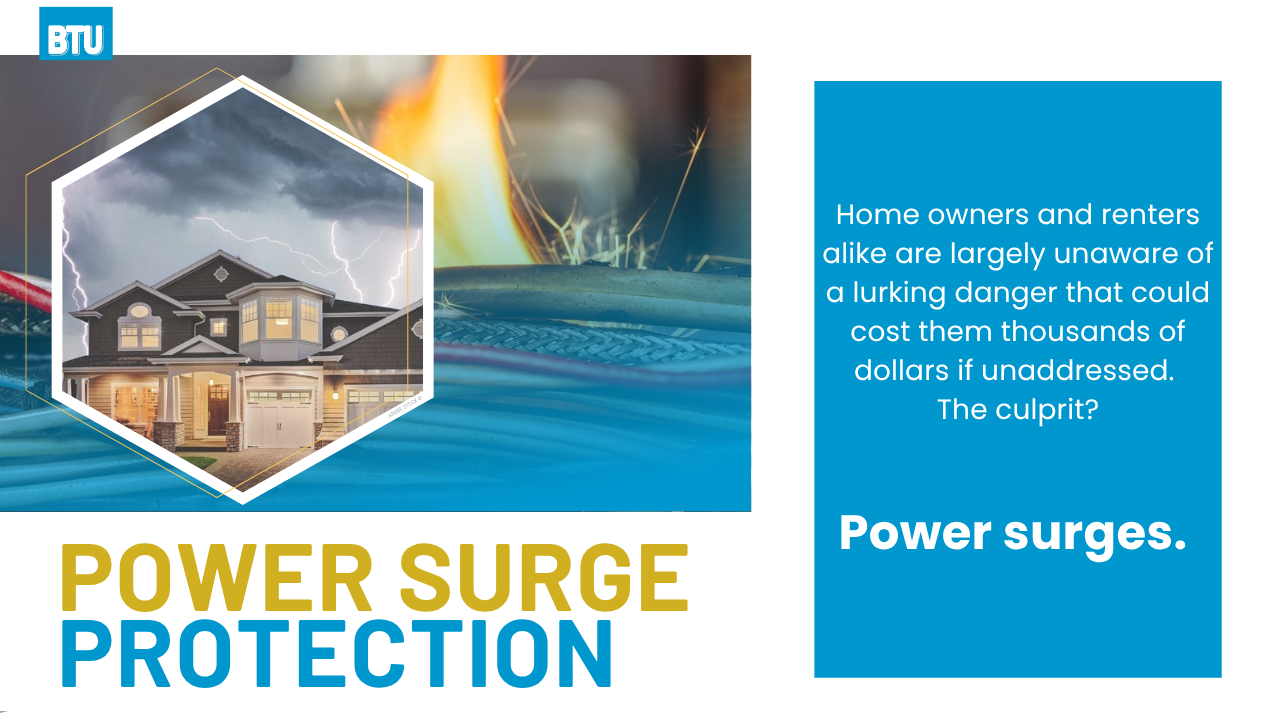
Home owners and renters alike are largely unaware of a lurking danger that could cost them thousands of dollars if left unaddressed.
While home and renter's insurance can help protect your home and possessions from natural disasters, inclement weather, fires, theft, and more, this ever-present problem is often not covered by those policies.
The culprit? Power surges.
Power surges are short spikes or disturbances, usually lasting fractions of a second, that “surge” high levels of voltage into electric systems. While they are less than a second in length, power surges can cause extensive damage, start electrical fires, and present other safety hazards that put property and life at risk. Most people associate these surges with inclement weather and lightning strikes. While surges from these and other external sources are common, up to 80% originate from inside homes and businesses.
Regardless of how or where they originate, these surges can damage or destroy unprotected electronics within homes or businesses. Most electrical outlets in the U.S. supply 120 volts, but power surges could supply 10,000 volts or more, leaving those electronics, literally and figuratively, fried. According to the National Electrical Manufacturers Association (NEMA), the average American home has $15,000 worth of equipment that needs protection from surges, including many modern necessities that make our daily lives easier.
Thankfully, there is an easy, cost-effective way to make sure your home and electronics are protected: surge protective devices, or SPDs.
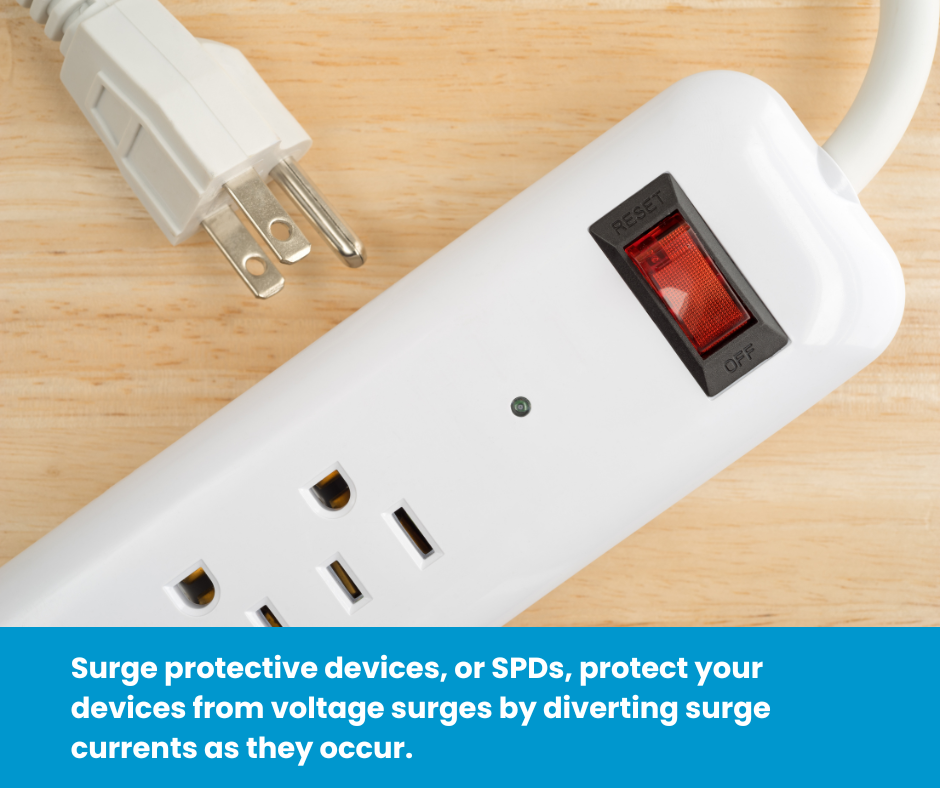
An SPD is a device designed to protect your devices from voltage surges and spikes by diverting surge currents as they occur and limiting the level of voltage that reaches your vulnerable electronics. There are a few types of SPDs available to consumers, and choosing the right one can vary based on your specific needs.
The most common SPD is a point-of-use surge protector, more than likely known to you as a “power strip”. By plugging individual devices like televisions, gaming systems, or other common household electronics into these strips, you can protect them from most surges. Just make sure you operate them safely and avoid plugging too many cords into one strip.